What are the best wetsuits for triathlon? These are 10 of our tried-and-tested favourites
Our team of experts have reviewed and rated the best wetsuits for triathlon on the market today – here are our top 10 options for men and women across all budgets.


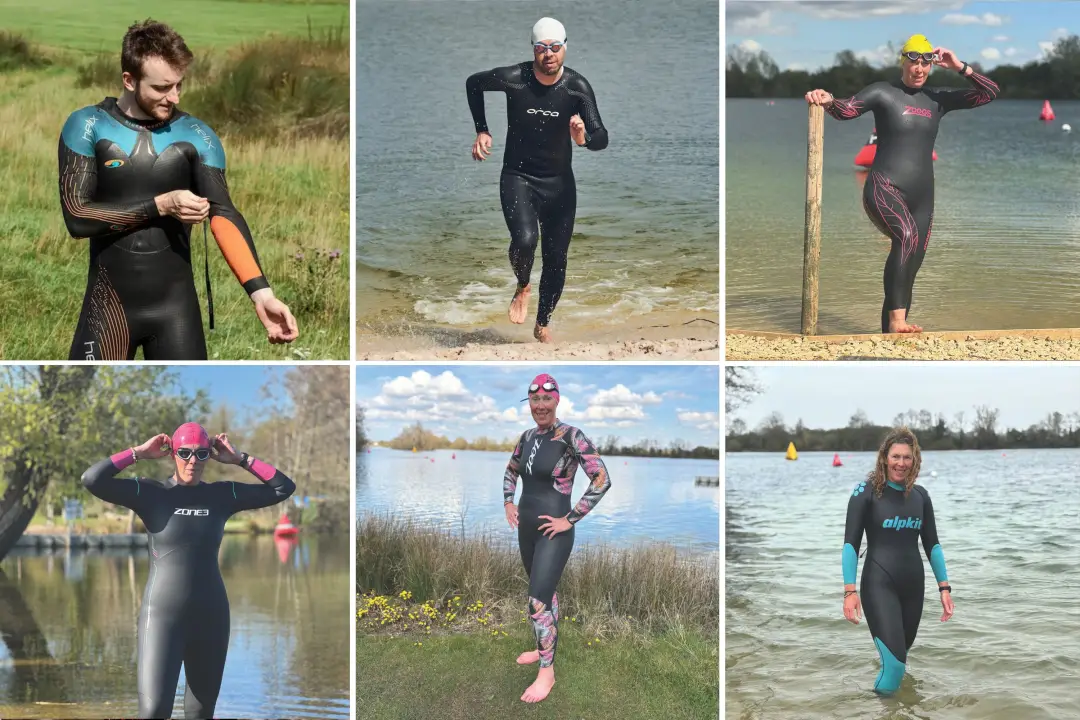
The triathlon wetsuit is one of triathlon’s big ticket items and one of the most crucial triathlon buys you’ll ever make. To help you make that purchase, here’s our list of the best triathlon wetsuits on the market today.
We’ve tested hundreds, if not thousands, of triathlon wetsuits over the years, so we know what makes a good value and high performing wetsuit for triathlon. When testing, we consider buoyancy, hydrodynamics, comfort/fit, and value for money.
This article gathers together our favourite triathlon wetsuits that we’ve tested over the years, plus why we recommend them and how they can elevate your triathlon performance. Let’s get into it…
Why you can trust 220 Triathlon
Our team of experts rigorously test each product and provide honest, unbiased reviews to help you make informed decisions. For more details, read how we test and rate products.
Best triathlon wetsuits at a glance
The Zone3 Aspire (buy) is a joy to swim in, offering exceptional comfort, flexibility, and performance. This new Aspire is the best triathlon wetsuit we’ve tested in 15 years. Period.
The Aqua Sphere Racer V3 (buy) provides high-end performance, striking visuals, and great flexibility.
The Zone3 Vanquish X (buy) offers a horde of tri-specific features and is super comfortable to swim in.
The Orca Athlex Float (buy) is buoyant and flexible, offering that natural swim feeling at a great price-tag.
The Huub Aegis X 3:3 (buy) feels great, looks good, and moves well through the water.
The Orca Zeal High Vis (buy) is not only super eye-catching and visible for open water swims, but also the maximum thickness and warmth allowed for tri, with extra thermal protection.
With longer arms and legs than most suits, the Blueseventy Fusion (buy) should fit lankier athletes well.
Comfort, warmth and buoyancy combine in the well priced Zone3 Agile (buy).
Living up to its name, the Orca Athlex Flex V2 (buy) is unrestrictive in and out of the water.
An oldie but a goodie, the Huub Brownlee Agilis (buy) feels as fast as ever and is best saved for racing.
The best triathlon wetsuits tested and reviewed
Best overall triathlon wetsuit

1. Zone3 Aspire
220 Triathlon Verdict
Zone3 have created a wetsuit that is just pure joy to swim in – a new high standard.
Pros
- Exceptional comfort and softness B-Prene neoprene
- Excellent flexibility and range of motion
- Fast swim performance
- Easy on/off thanks to cuffs and smoothness
Cons
- Recommend sizing down
| Specifications | Zone3 Aspire |
|---|---|
| Material | 100% sustainable, B-Prene Yamamoto neoprene |
| Sizing | Women's: XS-XL | Men's: S-XXL |
| Features | B-Prene Yamamoto neoprene; speed cuffs; SCS coating; body rotation enhancement; glued and blind stitched seams |
If there’s one thing you should know about me, it’s that I’m incredibly picky about wetsuits, so when I say the 2025 Zone3 Aspire is the best triathlon wetsuit I’ve ever tested, I mean it. From the moment you unbox it, the buttery-soft B-Prene Yamamoto neoprene feels luxurious, and that comfort continues in the water.
With 25 thoughtfully designed panels, it slips on effortlessly. I had to size down due to the generous stretch, but the medium/large fit like a dream: zero flushing, full flexibility. The women’s 3mm buoyancy profile supports without over-lifting—crucial for distance swimmers with sensitive backs.
Smart features like sensory wrist panels, drag-reducing coating, and the ultra-stretchy X-10 Extreme shoulder panel make it not just fast, but fun to swim in. Plus, it’s easy to spot in the water thanks to white cuffs, and slips off in seconds post-race. Zone3 has absolutely nailed it—this wetsuit is a game-changer.
Best triathlon wetsuit for warmth

2. Orca Zeal High Vis
220 Triathlon verdict
This is a very buoyant suit which I wouldn’t usually choose as a ‘floaty’ swimmer anyway, but it did reduce fatigue over very long swims.
Pros
- Comfortable and buoyant
- Warm with good visibility
Cons
- Hard to find any!
| Specifications | Orca Zeal High Vis |
|---|---|
| Material | Yamamoto |
| Sizing | XS to XL |
| Features | Yamamoto neoprene (5mm thickness legs and arms), Restube Ready clip, bright orange arms |
Despite its premium price tag, the Orca Zeal High Vis feels absolutely worth it. Orca’s years of wetsuit expertise shine through in a design that’s both stylish and impressively functional.
Let’s start with visibility — the vivid orange panels on the arms and legs are a brilliant safety feature and unmatched by anything else I’ve tested. There’s also a Restube Ready attachment on the lower back, letting you clip on a Restube inflatable for added security in open water.
Performance-wise, the suit combines 5mm neoprene (the maximum thickness allowed for triathlon racing) through the legs and core for extra warmth and buoyancy, along with Orca’s excellent ‘batwing’ back closure — a clever double layer that prevents cold water from sneaking in down the zip.
Available in sizes XS through XL, the Zeal range also includes a thermal version for winter swimmers, a ‘Perform’ model that prioritizes flexibility and lift, and a selection of matching high-vis accessories.
Best triathlon wetsuits for tall people

3. Blueseventy Fusion
220 Triathlon Verdict
Superb length in the body and a great fit for taller athletes. Looks smart and improved buoyancy.
Pros
- Good flexibility with minimal chest restriction
- Lots of leg lift buoyancy
- Warm and comfortable
Cons
- Bunches up behind the knees
- Feels thicker and heavier than thin racers
| Specifications | Blueseventy Fusion |
|---|---|
| Material | 39-cell Yamamoto neoprene |
| Sizing | Women: XS-XL | Men: XS-XXL |
| Features | 5mm legs, high buoyancy, SCS coating |
The new and updated 2025 Blueseventy Fusion offers a solid balance of comfort, flexibility, and performance. Aimed at swimmers seeking support with body position, it features 5mm neoprene in the upper legs and uses 39-cell Yamamoto neoprene for buoyancy and durability.
Fit is a strong point for the suit, feeling easy to get on, with good contact through the torso and ample space in the shoulders without chest or neck restriction. The neckline is slightly lower than most, which many will appreciate, and the bands at the neck and cuffs reduce water intake and chafing.
Although a bit bulky behind the knees when walking, this wasn’t noticeable in the water. The suit feels flexible, particularly around the shoulders, and provided warmth and comfort during longer sessions in cold water.
SCS coating enhances glide and durability, and the suit is quick to remove in transition. It’s especially suited for taller athletes needing length without sacrificing mobility.
Read my full review of the Blueseventy Fusion
Best value triathlon wetsuit

4. Orca Athlex Float
220 Triathlon verdict
Buoyant and flexible for a natural-feeling swim, with heaps of tech for only $349/£200.
Pros
- Incredible value
- Impressive range of movement
Cons
- Arms may be a bit thin if you really feel the cold
- Not that quick to get off in a rush
| Specifications | Orca Athlex Float |
|---|---|
| Material | Yamamoto neoprene |
| Sizing | 4, 5, 6, 6T, 7, 8, 9, 10, 11, orca sizing |
| Features | 4.5mm legs, medium buoyancy, low neckline, YKK zipper, SCS coating |
The Orca Athlex Float stands out from the crowd due to its high elasticity across the upper body. Made from Yamamoto 39 with extra flexibility built into the material along the arms, shoulders and back, the suit has some of the best range of movement of any I’ve experienced on test.
Some swimmers may find the arms a little thin in cold waters, but I had no problem in the British spring and summertime. The only downside is that they’re a bit slower to whip off in T1, though the YKK zipper is quick and easy to use. I found the low neckline adds to the unrestricted freedom in the water, with Super Composite Skin (SCS) hydrodynamic coating helping me glide through the swim stroke.
There’s plenty of lift in the legs thanks to 4.5mm neoprene leg panels, without it being overly aggressive, and I was still able to kick a little without breaching the surface.
There is an updated V2 version of the Orca Athlex Float now available.
If you’re new to the sport, or don’t want to spend so much money, take a look at our list of the best cheap triathlon wetsuits.
Highly recommended triathlon wetsuit
5. Huub Aegis X
220 Triathlon verdict
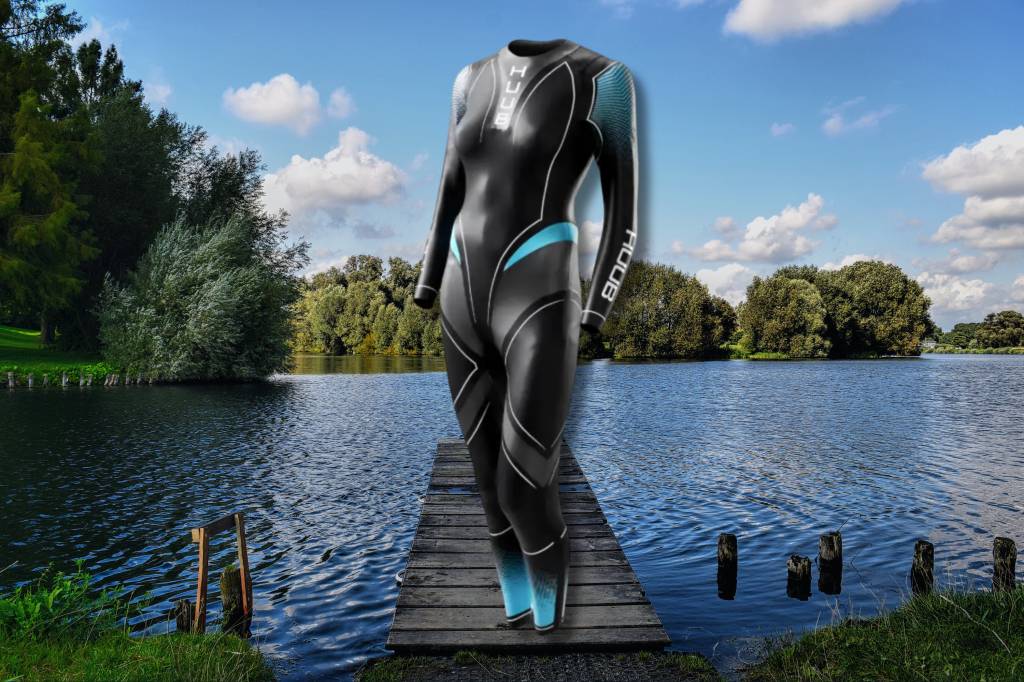
Great suit at a decent price with some good tech – plus it looks great and feels good in the water.
Pros
- Great fit
- Silky lining makes the suit quick to remove
- Buoyancy profile was supportive, but not too corrective
Cons
- More stretch would have been appreciated on the shoulders
| Specifications | Huub Aegis X |
|---|---|
| Sizing | 2XS, XS, S, SS, M, ML, L, XL |
| Features | 3:3 profile, medium buoyancy, X-O Skeleton design, breakaway zipper, |
Huub describes the Aegis X as a face-lifted version of one of their most popular suits, and having swum in many from the brand over the years, I appreciated the retention of the X-O Skeleton design, which gives great fit and body position in the water. I also loved the stretchy blue panels on the hips, which meant a curvier figure could easily get a good fit around the lower body.
I’ve previously loved racing in a 3:3 women’s Huub suit (the Atana, no longer available) and the Aegis X gives a similar flexible, yet supportive feel with a silky lining offering a quick and comfortable experience getting it on and off. In the water, I felt supported and buoyant, but not too high. I’d have liked a tiny bit more stretch on the shoulders for longer swims, but it’s a minor comment on a great suit that I’d happily reach for all year round.
Best triathlon wetsuit for range of movement

6. Orca Athlex Flex V2
220 Triathlon Verdict
Very flexible suit which is comfortable to swim in and easy to get on and off. Comes up slightly large.
Pros
- High comfort and flexibility
- Easy to get on/off
- Neutral buoyancy profile
Cons
- Loose fitting in some areas (size down if between sizes)
- Not for sinky leg swimmers
| Specifications | Orca Athlex Flex V2 |
|---|---|
| Sizing | Men: 4-11, orca sizing | Women: XS-XL |
| Features | Hydrodynamic coatings, highly flexible |
The Orca Athlex Flex V2 is a lightweight, flexible wetsuit aimed at athletes with a naturally strong swim position. Made with varying thicknesses of Yamamoto neoprene, it offers medium buoyancy and excellent shoulder and arm flexibility.
It’s soft and easy to get on, with a comfortable fit through the legs and torso—though slightly loose around the hips, suggesting a potential benefit to sizing down. The suit’s multi-panel design ensures unrestricted movement during longer swims, and it performed well up to 5km. The zip is easy to manage solo, and the suit includes gloves to protect the surface when pulling it on.
Thicker panels in key areas provide warmth without compromising feel in the water, and the SCS coating aids hydrodynamics. A standout feature is how easily the suit comes off, making transitions smooth and fast. A solid entry-level option for confident swimmers who don’t need added buoyancy.
Read our full review of the Orca Athlex Flex V2.
Best entry-level triathlon wetsuit

7. Zone3 Agile
220 Triathlon Verdict
Lots to like here in a suit pitched at entry-level. Slips through the water and fits comfortably.
Pros
- Warm and buoyant
- Comfortable fit
- Good visibility and style
Cons
- Lacks the performance of higher end suits
- Less streamlined than others
| Specifications | Zone3 Agile |
|---|---|
| Sizing | XS-XXL |
| Features | 2mm / 3mm / 4mm buoyancy, hydrodynamic coatings, quick transition cuffs, wider neckline, colourful visibility |
The Agile for Zone 3 offers a comfortable, warm entry-level suit with additional buoyancy to help you maintain a good body position. The suit is made up with a combination of 2, 3, and 4mm panels to give good flexibility where it is required around the shoulders whilst giving support through the core and legs.
The suit is covered with a combination of hydrodynamic Speedflo and Smoothskin coatings. The fit is true to size and sits particularly comfortably around the neckline with a slightly wider opening than others. The coloured flashes on the cuffs and ankles help to improve visibility whilst in the water and creates a smart, eye-catching suit which is slightly more feminine looking in styling. A solid choice for those new to open water.
Best mid-range triathlon wetsuit
8. Zone3 Vision
220 Triathlon verdict
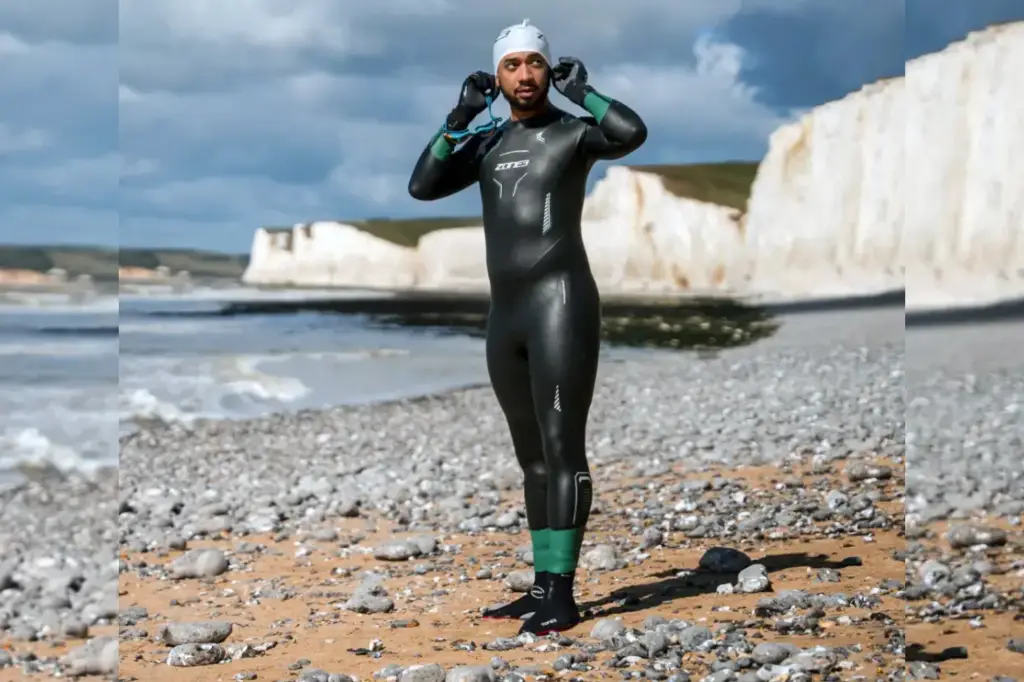
Not outdone by the pricier suits and an entry/mid-level winner.
Pros
- Arm and leg cuffs make removal an easier affair
- Plenty of buoyancy for sinky legged swimmers
Cons
- Not as supple as some competition
- Higher price than previously
| Specifications | Zone3 Vision |
|---|---|
| Sizing | S, SM, ST, M, ML, MT, L, XL, 2XL |
| Features | 1.5mm / 2mm / 5mm, high buoyancy; low neckline, YKK zipper, arm and leg cuffs |
| Material | SCS coating, limestone-derived materials, Aerodome air bubbles between layers |
The Vision is a regular in our budget wetsuit tests, but a recent price jump sees it enter the mid-range collection from now on.
While the Vision can’t compete with the most flexible, and the 2mm shoulder panels are noticeably less supple than the 1.5mm used elsewhere, the loftier company does reinforce just what a good value suit this is.
There’s top-draw tech such as 39-cell Yamamoto neoprene, SCS coating for hydrodynamics and an environmental boost with a limestone-derived (over petroleum) construction, along with race-friendly features like arm and leg cuffs for easy removal.
Buoyancy is reasonably high due to the 5mm thicknesses of neoprene and Aerodome air bubbles between the layers, and warmth in the 10°C water was one of the best of the bunch.
Best top-end triathlon wetsuit

9. Zone3 Vanquish X
220 Triathlon verdict
Solid all-rounder with great tri-specific features.
Pros
- Comfortable and chafe-free
- Great flexibility in the upper body
Cons
- May prove too buoyant for some women
- High price tag
| Specifications | Zone3 Vision |
|---|---|
| Sizing | S, ST, SM, ML, M, MT, L, XL |
| Features | 0.3mm-5mm, high buoyancy; quick release arm and leg panels, Alpha Titanium and Silk X lining, SCS on sleeves |
The Vanquish X is an evolution of Zone3’s popular Vanquish, featuring sparkly new tech such as its Titanium Alpha structure that adds a titanium alloy coating to the neoprene to improve warmth by a claimed 40%. This won’t affect flexibility, says Zone3, and my swim experience supported that claim.
There’s an impressive 11 different materials used in the construction of this suit, ranging from 0.3mm on the arms to 5mm in the core and upper legs. Intriguingly, there’s no difference between the buoyancy profiles for the men’s and women’s version, so our female tester felt particularly buoyant – potentially a little too much so. The neckline is a little deeper with a more refined shape than the Vanquish, which made for a chafe-free swim.
I’ve always appreciated the lining in Zone3 wetsuits, and the new Silk X lining here is no different, proving to be silky smooth against the skin as the name suggests. I think the improvements are more evolutionary than revolutionary compared to the Vanquish, though, maintaining similar characteristics but with a sizeable price hike.
See our full Zone3 Vanquish X review for more
Best race-day triathlon wetsuit
10. Huub Brownlee Agilis
220 Triathlon verdict
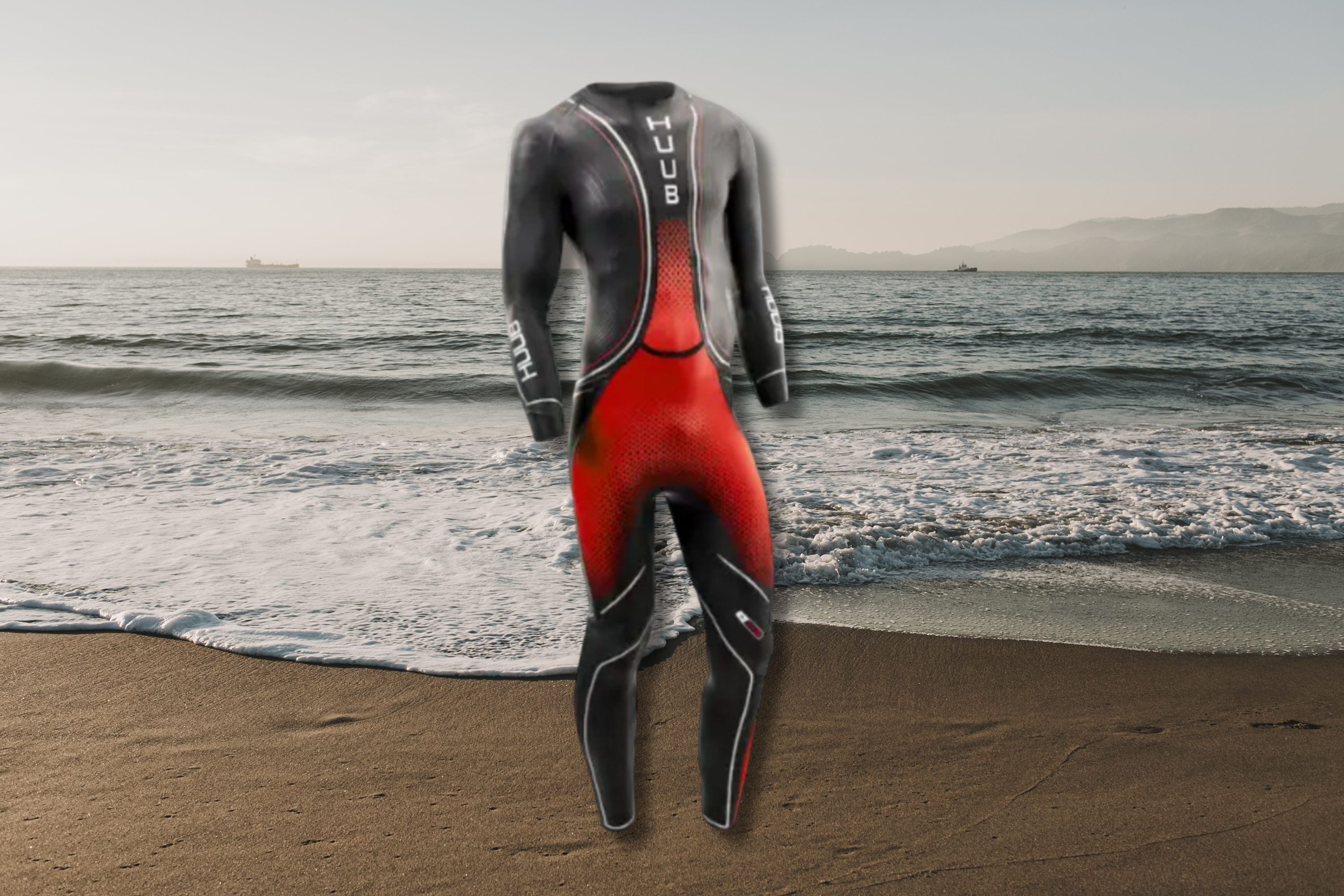
Stunning flexibility with looks to match; still one of our favourite suits to swim in.
Pros
- Superbly flexible upper body
- Great tech to help with rotation and positioning
Cons
- Question mark about durability
| Specifications | Huub Brownlee Agilis |
|---|---|
| Sizing | XS, SMT, M, MT, ML, L, XL, 2XL |
| Features | 3:5 male suit and 3:3 female suit, medium buoyancy; Quick release panels, ultimate seal collar, reverse zipper, +43 Foam buoyancy, Arms Neutral position |
The Brownlee Agilis wetsuit has been part of Huub’s range for a few years now, but this year two new colourways have been launched, including red (for men), pictured here, and coral (for women). Our male tester said: “This is a hugely supple and flexible wetsuit that really moves with you through each arm stroke thanks to Huub’s ‘Arms Neutral’ tech.”
The buoyancy profile is 3:5 in the male suit and 3:3 in the female. Testing the latter, 220 Editor Helen Webster said that the combination of flexible arms and support through the core and lower body made long-distance swimming feel much less tiresome than many competitors. Sinky-legged swimmers will also appreciate the brand’s +43 buoyancy foam found in the core and thighs, which also helps with rotation. I’ve praised the Brownlee Agilis before, and it’s continued to grow on us. Our only gripe is that it’s so delicate.
See our full Huub Brownlee Agilis wetsuit review for more
| Specifications | Zone3 Aspire | Orca Zeal High Vis | Blueseventy Fusion | Orca Athlex Float | Huub Aegis X | Orca Athlex Flex V2 | Zone3 Agile | Zone3 Vision | Zone3 Vanquish X | Huub Brownlee Agilis |
|---|---|---|---|---|---|---|---|---|---|---|
| Price | £549 | £379 | £375 | £399 | £399 | £299 | £219 | £399 | £699 | £749 |
| Sizes | Women's: XS-XL | Men's: S-XXL | XS to XL | Women: XS-XL | Men: XS-XXL | 4-11 Orca sizing | 2XS-XL | Men: 4-11, orca sizing | Women: XS-XL | XS-XXL | S-XXL | S-XL | XS-XXL |
| Rating |
★★★★★
|
★★★★★
|
★★★★★
|
★★★★★
|
★★★★★
|
★★★★★
|
★★★★★
|
★★★★★
|
★★★★★
|
★★★★★
|
| Buy Now | Buy Now | Buy Now | Buy Now | Buy Now | Buy Now | Buy Now | Buy Now | Buy Now |
What features should you look for in a triathlon wetsuit?
The fit of your triathlon wetsuit is paramount. The wetsuit needs to be snug rather than loose. However, if it’s too tight, your swimming experience won’t be pleasant and movement could be restricted. If it’s too loose it’ll allow water into the suit, which will seriously slow you down. You also need to be truthful with yourself about your swim level. If you’re a beginner you might need one that will help you maintain your swim position in the water.
- Buoyancy profile: A good triathlon wetsuit should enhance buoyancy to help keep your body in an optimal swimming position. Look for neoprene thickness that varies across the suit, this means it’ll be thicker in the lower body and thinner in the upper body. If you tend to have heavier or sinky legs when you swim, look for a suit with at least 4mm-5mm buoyancy in the legs.
- Flexibility: Flexibility across the shoulders and arms is crucial for a natural range of motion during the swim. Thin neoprene (1.5–2mm) in these areas reduces resistance and fatigue.
- Fit and comfort: A triathlon wetsuit should fit snugly without restricting movement or feeling tight across the chest, which can affect breathing. Pay attention to the comfort of the neckline and seams to avoid chafing as you swim. Ideally, you would test your wetsuit a couple of times within the warranty period before deciding if it’s the right fit for you.
- Hydrodynamics: Some triathlon wetsuits are coated with materials like SCS (Super Composite Skin) to reduce drag in the water. This helps increase speed and efficiency during the swim leg. Otherwise, choice of buoyancy profile (yes again, we know) is key, make sure you pick the right set-up to ensure your body is lifted to a streamlined position in the water.
- Quick-release cuffs and ankles: Designed for fast transitions, these features make it easier to peel off your wetsuit quickly during T1. Look for tapered legs, wrist cuffs, and special silky smooth lining materials.
- Thermal insulation: Depending on water temperature, a triathlon wetsuit should provide enough insulation to maintain core body temperature without overheating. Standard tri wetsuits range from 3–5mm maximum thickness, but those optimised for cold water may also have a thermal lining for warmth that doesn’t compromise on flexibility.
- Durability: Check for high-quality stitching (like glued and blind-stitched seams) and reinforced panels, that won’t come apart at the seams after a few swims. A durable wetsuit stands up better to repeated race use and training and equals better value for money. Faster, thinner wetsuits can be fragile. If you’ve invested in a high-end suit, it could be best to save to for race day and train in something sturdier.
- Gender-specific design: Though unisex triathlon wetsuits. do exist, most have both men’s and women’s cuts to accommodate different body shapes. This ensures a better fit and optimal performance.
- Race compliance: Make sure the wetsuit meets competition rules for neoprene thickness (usually not exceeding 5mm) and is legal in races where wetsuits are allowed. When race organisers rule out wetsuits due to high water temperatures, use of the best tri-suits instead.
Frequently asked questions
If you’re racing a triathlon, the answer to this question is almost certainly yes. A standard wetsuit will be much slower through the water, less flexible and more bouyant than a triathlon wetsuit designed with hydrodynamics and range of movement in mind.
Triathlon wetsuit also have specific features, such as zips that are easy to reach and pull for fast removal to save you seconds in transition.
Most manufacturers recommend rinsing your wetsuit with fresh water after every use, then hanging it up inside-out to dry. Don’t hang your wetsuit in the sun though, since sunlight can degrade the material.
Once dry, try to find somewhere to lay it out flat – folding the material can lead to creasing. If you don’t have room to leave it flat, hanging is your second-best solution. Don’t expose your wetsuit to high temperatures in a warm room.
For more information, read our guide on how to store a wetsuit.
The best open-water swimmming wetsuits can be as fast in the water as triathlon wetsuits because they usually have a fast coating, good flexbility and appropriate buoyancy. You might not want to race tri in one though because they can be hard to take off.
Their material tends to be thicker around the core area to better insulate you in cooler sea and lake temperatures.
How we tested and reviewed triathlon wetsuits
Our team of experienced triathletes and gear reviewers tested these suits in the UK in both lakes and the sea. The latter especially allowing us to access how the suits dealt with colder seawater temps, dealing with waves and currents to judge their race-day form (and water ingress).
Each was tested for comfort, performance, buoyancy, durability, hydrodynamics, zipper, removal speed, budget and the visual design. Any wetsuit that scored 90% and above is a market-leading product, while those scoring between 80-90% are also deemed to be impressive. Wetsuits scoring between 70-80% offer good performance, as long as the highlighted flaws aren’t much of an issue for you. Products scoring below 70% can still be worth considering if the price is right, but don’t come highly recommended.
Meet our testers:
Helen Webster is 220’s editor and in her free time she’s a qualified swim coach and experienced triathlete. Helen gets stuck into all things gear on the daily and any spare moment is spent sussing out the nearest body of water.
Sarah Broadley been involved in triathlon since 2012 and is now an open-water swim coach based in the Cotswolds. Sarah is a keen swimmer and cyclist and has been testing gear for 220 for several years now
Author Matt Baird has been racing triathlon for over 20 years, he’s a previous 220 team member, with experience as editor of Cycling Plus and now at BBC Countryfile. Matt dives headfirst into every challenge and knows the triathlon wetsuit market like the back of his hand.
Recent updates
- October 2025: We’ve added a ‘meet our testers’ section to properly shout about our experienced gear reviewers.
- November 2025: We’ve updated our imagery with more outdoors images, plus added a thermal wetsuit option to the mix.
- January 2026: We updated the links to our recommended triathlon wetsuits to get you the best deals possible.
- March 2026: We cut our selection of wetsuits down to 10 and ensured they were all in stock
- April 2026: We updated all of our product specs to schema tables and made sure all of our reviews were up to date
- June 2026: We added a comparison table for every product and updated all our product links
- July 2026: We updated product links, tightened up copy where needed and added all products to the ‘at a glance’ section.


 Helen Webster
Editor, 220 Triathlon
Helen Webster
Editor, 220 Triathlon With contributions from